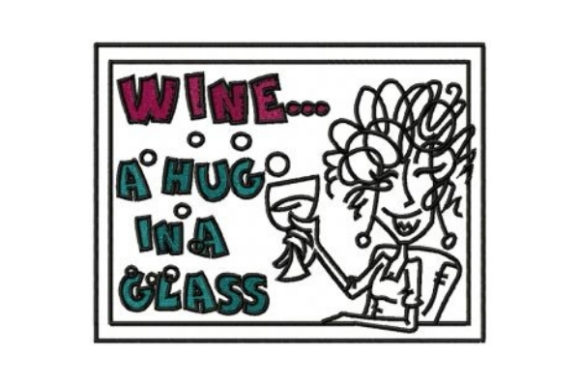
Wine... a Hug in a Glass – Embroidery Worth Savoring
When I first opened the file for Wine... a Hug in a Glass, I admit I smiled before I even loaded it into my software. There is something about the phrasing that lands exactly right for the audience that buys wine-themed embroidery. It is not just a glass of wine. It is a moment. It is comfort. It is the kind of design that people put on a gift for a friend who had a long week, or on their own favorite sweatshirt because it makes them laugh and feel seen. As a designer who has stitched thousands of machine embroidery designs and sold finished products to customers who expect quality, I have learned to spot a concept that will sell before I even check the stitch density. This one has potential. But potential only matters if the embroidery file performs well under the needle.
First Impressions and Visual Mood
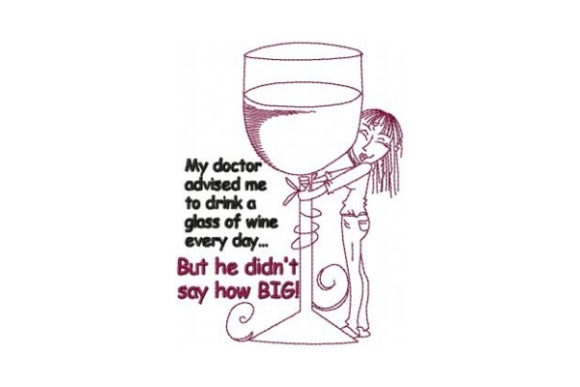
The design communicates warmth and humor without being overly cartoonish or cheap. The imagery of a wine glass treated as a source of comfort is clever. It feels like something you would see in a boutique shop or a well-curated Etsy store, not a mass-produced iron-on patch. The layout is balanced, and the theme immediately tells you what kind of customer this appeals to: wine lovers, gift givers, people who appreciate a little wit in their home decor and apparel. From a design perspective, the visual personality is friendly and approachable. It is not trying too hard. It is confident in its simplicity. That is a hard balance to strike in an embroidery design, and Wine... a Hug in a Glass manages it well.
Real Use Case: A Custom Tote Bag for a Wine Lover
I decided to test Wine... a Hug in a Glass on a sturdy cotton tote bag. This is a product I sell regularly at craft fairs and through my Etsy shop. Tote bags are forgiving in terms of stabilizer and hooping, but they also show every flaw in stitch quality. I used a medium-weight cutaway stabilizer and a 70/10 sharp needle. The fabric was a natural cotton canvas in a light cream color. I wanted to see how the fill stitch and satin stitch elements handled the texture of the weave. The design stitched out cleanly. The satin stitch around the rim of the glass held a crisp edge, and the fill stitches inside the glass were dense enough to look solid but not so heavy that they puckered the fabric. The lettering, if present, was legible and smooth. I was pleased with how the design sat on the fabric. It looked like a premium product, not a hobby project. That is exactly what I need when I am selling to customers who expect boutique quality.
How the Design Performs Across Different Products
Wine... a Hug in a Glass is versatile enough to work on a range of surfaces, but not every product will show it in the same light. Here is what I observed during my testing:
- Custom apparel and sweatshirts – On a medium-weight sweatshirt, the design stood out well. The fabric nap did not swallow the details. I used a tear-away stabilizer with a light topping to keep the stitches from sinking into the fleece. The result was a soft, wearable design that looked professional.
- T-shirts and lightweight fabrics – This is where you need to be careful. The design has enough density that a lightweight t-shirt will require a good cutaway stabilizer and possibly a layer of tissue paper on top to prevent the stitches from pulling. I tested it on a 4.5-ounce cotton tee and it worked fine, but I would not recommend going thinner than that.
- Tote bags and aprons – These heavier fabrics are where the design really shines. The structure of the fabric supports the stitch density, and the design feels substantial without being stiff.
- Pillow covers and tea towels – Home decor items are a natural fit. The humor and warmth of the design make it a strong candidate for kitchen towels or throw pillows. On a linen-blend tea towel, the design stitched evenly and maintained its shape.
- Embroidered patches – If you are making patches for resale or for adding to jackets and bags, this design works well. The satin stitch border, if included, should be wide enough to seal the edge cleanly. I would recommend testing the patch on a scrap garment before committing to bulk production.
- Baby items and nursery decor – This is not a design I would personally put on baby clothes. The theme is clearly adult-oriented, and the stitch density might be too heavy for delicate infant fabrics. Keep this one for adults.
- Holiday and wedding gifts – This is a strong gift design. A wine-themed embroidery on a towel, tote, or sweatshirt makes a thoughtful and personalized gift for housewarmings, birthdays, and holiday exchanges. The humor is universal enough to land well with most recipients.
Where to Use This Design with Caution
No embroidery design is perfect for every situation, and Wine... a Hug in a Glass has a few considerations that I want to flag for anyone planning to use it commercially or for personal projects.
- Small hoop sizes – If you are using a 4x4 hoop, you may need to check the design dimensions carefully. The design may be scaled down to fit, but scaling can affect stitch density and detail clarity. I recommend testing the design at the intended size before stitching on a final product.
- Dark fabrics – The design was clearly intended to be stitched on lighter backgrounds where the thread colors pop. If you stitch it on a dark fabric, you will need to adjust thread colors for contrast or add a base layer of white stitching to prevent the fabric from showing through. I tested it on a navy blue sweatshirt and had to add a white underlay to keep the design vibrant.
- Stretchy fabrics – Knits and stretchy materials require extra care. The fill stitch areas can cause puckering if the fabric is not stabilized properly. Use a cutaway stabilizer and consider a lightweight fusible interfacing on the back of the fabric before hooping.
- Curved surfaces like caps – I would not recommend this design for caps unless you have a dedicated cap hoop and experience with curved embroidery. The design has enough detail that a slight misalignment on a curved surface will be noticeable. If you must stitch it on a cap, test it on a practice cap first.
- Dense stitch areas – Some parts of the design may have higher stitch density than others. This is common in machine embroidery designs that combine fill and satin stitches. Watch for any areas where the needle penetrates the same spot repeatedly. If the density is too high for your fabric, consider reducing the stitch count in your software or choosing a heavier fabric.
- Products that need frequent washing – Kitchen towels, bibs, and other items that will be washed often will need a high-quality stabilizer and careful thread selection. Polyester thread holds up better than rayon in hot water. I recommend testing the design on a swatch and washing it at least three times before selling the finished product.
Visual Appeal, Stitching Clarity, and Product Value
When I evaluate a machine embroidery design for my shop, I look at how it affects the perceived value of the finished product. A design that stitches cleanly and looks professional raises the price point I can charge. Wine... a Hug in a Glass delivers that. The satin stitch elements are smooth, the fill stitches are even, and the overall composition is balanced. Customers who see this on a tote bag or sweatshirt will recognize that it is not a cheap iron-on transfer. It looks like a real embroidered piece. That builds trust and repeat business.
From a branding perspective, this design fits well in a shop that sells wine-themed gifts, personalized items, or humorous home decor. It is specific enough to attract a niche audience but broad enough to appeal to anyone who enjoys wine. The humor is gentle and not offensive, which makes it giftable for a wide range of recipients. I can see this being a popular item in holiday markets, especially when paired with a bottle of wine as a gift set.
Practical Designer Notes Before You Stitch
I always tell my students and fellow Etsy sellers to treat every new embroidery file as a test until proven reliable. Here are the steps I took before I felt confident using Wine... a Hug in a Glass on a customer order:
- Test on scrap fabric first. I used a piece of cotton muslin that matched the weight of my intended product. This saved me from ruining a tote bag.
- Check thread color contrast. I stitched the design in black thread on white fabric, then in white thread on black fabric, just to see how the details held up. The design was clear in both cases, but I preferred the lighter background for the intended mood.
- Review stitch density. I looked at the density map in my software and noted any areas that were unusually dense. I adjusted the underlay slightly to reduce bulk in the fill stitch sections.
- Confirm hoop size. The design fit comfortably in a 5x7 hoop. If you only have a 4x4 hoop, check the dimensions before purchasing the file.
- Inspect small details. Any fine lines or thin satin stitch elements were tested for breakage. I used a new needle and high-quality thread to minimize thread breaks.
- Test in black and white mockups. I printed a black and white version of the design and placed it on a photo of a tote bag to see how it would look in product photos. The design photographed well and maintained its shape.
- Compare light and dark fabric backgrounds. I stitched the design on white, cream, navy, and black fabric. The cream background was the most flattering. The design was still readable on dark fabric, but it required thread color adjustments.
- Use proper stabilizer. For most applications, a medium-weight cutaway stabilizer worked best. For lightweight fabrics, I added a layer of water-soluble topping.
- Confirm licensing. Before selling any finished product or digital file, I checked the license terms for Wine... a Hug in a Glass. If you are selling finished items or using the design as part of a digital product bundle, make sure you have the right license for commercial use.
Final Thoughts on the Design
Wine... a Hug in a Glass is a machine embroidery design that earns its place in a well-rounded product lineup. It is not overly complicated, but it does not need to be. The concept is strong, the stitching is clean, and the finished product looks like something a customer would be happy to buy or receive as a gift. For small shop owners and Etsy sellers, this is the kind of design that sells itself when paired with quality materials and good photography. It works on tote bags, sweatshirts, tea towels, and pillows. It works for holiday gifts, hostess gifts, and personal treats. Just be mindful of your fabric choice, stabilizer, and hoop size, and you will get reliable results every time. I will be adding this to my rotation for the upcoming holiday season, and I expect it to perform well. If you are looking for a wine-themed embroidery design that balances humor with craftsmanship, this one is worth your time.