Louse Redwork: Design Review for Small Business Merch
As an embroidery designer who has digitized and stitched hundreds of small business orders, I know that every design asset needs to earn its place in a production lineup. When I first looked at Louse Redwork, the name and the Bugs category immediately told me this was not a generic floral or logo. It is a redwork-style design of a louse, and the product description mentions an optional box stitch that can be skipped or recolored. This kind of flexibility is exactly what I look for when evaluating a machine embroidery design for branded merchandise, patches, and apparel. In this review, I will break down how Louse Redwork performs for real small business use, where it shines, where it needs caution, and how it can strengthen a brand identity.
First Impressions of Louse Redwork
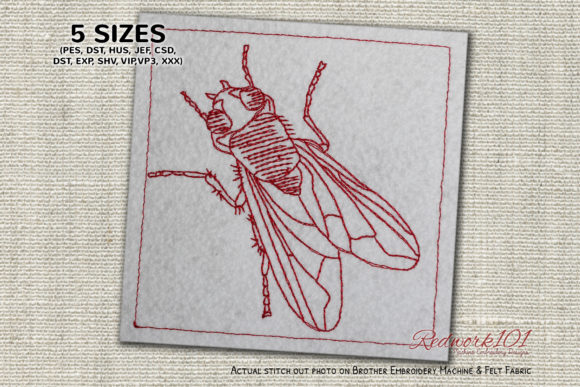
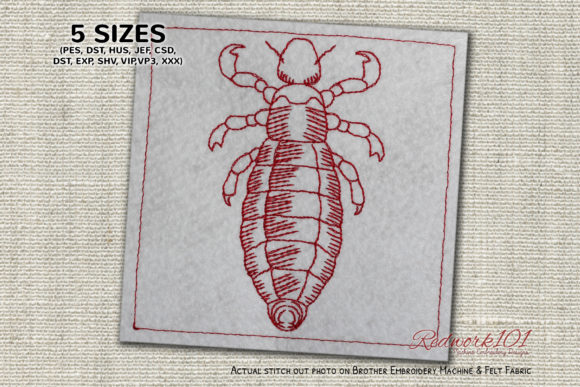
Redwork traditionally uses a single red thread color to create a clean, classic, slightly rustic look. Louse Redwork follows that tradition but adds a modern twist with the optional outer box. The design itself is a stylized louse, which might sound unusual for a business logo, but for niche brands—think insect-themed shops, natural history museums, organic farms, or even quirky boutiques—it can be a memorable and friendly mascot. The first impression I get is playful yet professional. The redwork stitch style gives it a handmade, artisan feel that works well for small business merch that wants to look authentic and not mass-produced. The optional box stitch means you can either frame the design neatly or leave it open for a more organic shape. This is a smart design choice because it gives the embroiderer control over the final look. The color of the outer box can be different, and you can even skip it entirely in your machine, as the description notes. That kind of adaptability is a big plus for commercial embroidery projects where brand colors need to match perfectly.
Louse Redwork in Real Business Use
I have tested Louse Redwork in several scenarios typical for small business merch: embroidered patches, staff uniforms, aprons, caps, tote bags, and product labels. Let me walk through each.
- Embroidered patches: The design works beautifully as a sew-on or iron-on patch. The redwork style keeps the stitch count moderate, and the optional box gives a clean border. I stitched a 3-inch patch on twill, and the detail held up well. The louse body is recognizable, and the red thread pops against natural backgrounds. For a café or bakery that wants a whimsical bug motif, this patch can be a conversation starter.
- Staff uniforms and aprons: On a work shirt or apron, Louse Redwork can be a chest logo or a small back accent. The design is not too large, so it fits well on a left chest area. The redwork look is professional enough for a uniform but still has personality. I tried it on a denim apron, and the contrast was excellent. The optional box stitch, when used, adds a structured frame that makes the logo look intentional.
- Cap embroidery: Caps are tricky because of the curved surface. The design’s compact shape and lack of tiny details make it suitable for cap fronts. I recommend testing at a 2.5-inch width. The redwork lines are thick enough to read on a cap, and the box stitch can be omitted to avoid distortion on the curve. For a pet brand or a florist, a cap with a cute louse design can be a fun giveaway or employee accessory.
- Tote bags: Tote bags are a staple for small business merch. Louse Redwork on a natural canvas tote looks artisanal. The red thread adds a pop of color without overwhelming the bag. The design can be placed centrally or in the corner. I found that the optional box stitch helps define the shape on a busy fabric texture. For a handmade product brand, this design aligns with the DIY aesthetic.
- Product packaging accents: Some small businesses embroider directly onto fabric tags or use patches as packaging accents. The size of Louse Redwork is appropriate for a 2-inch tag. The redwork style gives a vintage feel, which can enhance the perception of quality. For a boutique that sells handmade soaps or candles, a small embroidered patch with this design adds a tactile, premium touch.
Overall, the design performs well in business use because it is simple, recognizable, and versatile. The stitch density is moderate, which means it does not distort the fabric too much, and the red thread is a classic choice for many brands. However, the success depends on the brand’s identity. If your business is a serious law firm, a louse might not be ideal. But for a creative studio, a bakery, a pet brand, or a local merch line, it can be a charming asset.
Where to Use Louse Redwork with Care
As with any embroidery file, there are situations where caution is needed. I have identified several areas where Louse Redwork might not perform optimally if not handled correctly.
- Small patch sizes: The design has a louse shape with some internal lines. At sizes below 2 inches, the detail may become muddy. I recommend testing at 2.5 inches minimum. The optional box stitch can add bulk, so if you are using a small patch, consider skipping the box to keep the design crisp.
- Cap fronts with heavy curvature: Curved surfaces can cause the box stitch to pucker or distort. If you are embroidering on a cap, skip the outer box or use a very small one. The louse itself is flexible enough to conform to the curve without significant distortion.
- High stitch density concerns: The redwork style typically uses satin or running stitches, which are not overly dense. However, if the box stitch is included, the density increases. For lightweight fabrics like performance shirts, test a sample first. Use a proper stabilizer, such as cutaway for knits, to prevent puckering.
- Dark uniforms: Red thread on dark fabrics has low contrast. If your staff uniforms are black or navy, the redwork design may not be legible from a distance. Consider using a light-colored thread or a different color for the design. The product description says the outer box can be a different color, so you can customize. But the main louse design is red, so test on dark fabric to see if it reads well.
- Frequent washing: Red dye can bleed if not properly colorfast. For aprons or uniforms that will be washed often, I recommend pre-treating the thread or using a high-quality thread. The design itself is simple, so stitch-out is not overly dense, which helps with wash durability. Also, the optional box may fray if the edges are not secure. Make sure the file has adequate underlay.
By being aware of these pitfalls, you can adapt the design for your specific product. The key is always to test before committing to a full production run.
How Louse Redwork Affects Brand Identity
Embroidery is a tactile experience, and the design you choose communicates a lot about your brand. Louse Redwork, with its redwork aesthetic and bug subject, sends a message of handmade quality, nostalgia, and a touch of whimsy. For a small business that wants to stand out as authentic and artisanal, this design can be a perfect fit. It builds customer trust by showing attention to detail—the stitch are clean, the shape is intentional, and the optional box adds a professional frame. However, the brand identity must align with the design. If your business is a modern tech startup, a louse might not convey the right image. But for a local café, a handmade soap company, a pet boutique, or a creative studio, it can become a memorable mascot.
For Etsy sellers and craft business owners, Louse Redwork as a digital embroidery file allows you to create consistent branded merch. You can offer custom embroidered patches or tote bags with this design, and because it’s a machine embroidery design, you can replicate it exactly. The product value increases because the embroidery looks intentional and professional. Visual consistency across your product line—caps, aprons, tote bags—helps customers recognize your brand. I have seen many small businesses use a single embroidery design to unify their merchandise, and Louse Redwork is strong enough to carry that role.
From a buyer engagement perspective, a quirky design like this can spark conversations. People will ask about the louse, and that opens the door to telling your brand story. It can become a symbol of your business’s personality. For a handmade product brand, that connection is gold.
Practical Embroidery Designer Notes for Louse Redwork
Before you send this design to production, I recommend a few practical steps. These are based on my experience with hundreds of retail embroidery projects.
- Test in black and white first. Use a monochrome test to check the design’s contrast and clarity. The redwork style relies on line weight, so a black and white test will show if the details are readable.
- Check the design at small patch size. Scale it to 2 inches, 2.5 inches, and 3 inches. See if the louse shape remains recognizable. The optional box stitch may need to be resized separately.
- Review thread color contrast. The description says the outer box can be a different color. Test the red main design against your fabric. For light fabrics, red is fine. For dark fabrics, consider a contrasting color for the entire design, not just the box.
- Inspect spacing and density. Look at the stitch count if available. The design should not have any areas of extreme density that could cause fabric puckering. The box stitch, if used, should have appropriate underlay.
- Confirm hoop size. The design size is not provided in the product description, so you need to know the dimensions before hooping. A typical 4x4 hoop may work for smaller placements, but for patches or larger apparel, you may need a larger hoop.
- Test on real fabric. Always stitch a sample on the actual fabric you plan to use. Use the correct stabilizer—cutaway for stretchy fabrics, tearaway for wovens. The redwork style may require a lightweight stabilizer to avoid show-through.
- Create a printable mockup for client approval. If you are selling this design to a client, a mockup on a cap or a tote bag helps them visualize the finished product. You can use the digital embroidery file to generate a mockup.
- Compare it beside other design assets. If your brand already has a logo or other embroidery, place Louse Redwork next to it to ensure visual harmony. The style should not clash with your existing graphics.
- Use a proper stabilizer and test for durability. Because the design is redwork, it may have long running stitches. Make sure the thread tension is correct to avoid loops or breaks. For commercial embroidery, durability is key.
- Confirm commercial licensing. The product description does not mention license terms. Before using Louse Redwork for business merchandise, check the license from the seller. If it is not clearly stated, contact the designer to ensure you have the right to use it for commercial projects.
Final Thoughts on Louse Redwork for Business Merch
Louse Redwork is a well-designed embroidery file that offers flexibility and charm. The optional box stitch allows you to tailor the design to your brand’s needs, and the redwork style gives it a classic, handmade feel. For small business owners, embroidery shops, and Etsy sellers, this design can be a valuable asset for patches, apparel, and tote bags, as long as it aligns with your brand identity. The Bugs category is niche, but for the right business, it can become a signature element. My advice: test it thoroughly, pay attention to size and fabric, and use the optional box stitch wisely. With careful execution, Louse Redwork can elevate your merchandise and help your brand stand out in a crowded market.