Kitchen Mixer Applique Design Review
When I first opened the Kitchen Mixer Applique Design file, I was immediately struck by its quiet confidence. This is not a flashy, overly detailed pattern that screams for attention. Instead, it feels like a thoughtful, well-observed piece of art meant for real embroidery projects. As someone who has tested hundreds of embroidery designs for my own small shop and for clients, I’ve learned to spot patterns that will stitch out cleanly, hold up to washing, and actually make customers smile. This machine embroidery design does all of that, and it does it with a refreshing sense of purpose.
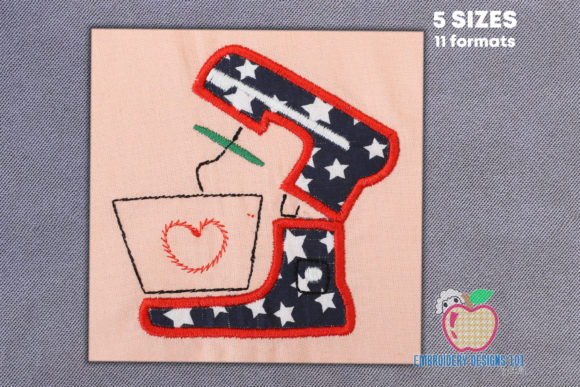
The design captures a classic kitchen mixer with a realistic silhouette and layered applique details. The mood is warm, inviting, and slightly nostalgic—like something you’d see on a vintage apron or a handmade gift for a baker friend. The shape is immediately recognizable, and the stitch work, from the satin stitch edges to the fill stitch accents, gives it a tactile quality that feels substantial. It belongs naturally on a custom embroidered apron, a kitchen towel, a tote bag, or even a pillow cover for a breakfast nook. But I’ve also seen it work beautifully on a sweatshirt for a coffee shop owner or a baby onesie for a foodie parent. The design’s versatility comes from its balanced layout and its ability to sit well on both flat and curved surfaces.
First Impressions: A Design That Feels Right at Home
The Kitchen Mixer Applique Design has a layout that feels both grounded and playful. The mixer is centered, with enough negative space around it to allow for easy placement on a variety of product types. The applique layers are well-defined, and the stitching details—like the subtle lines on the mixer body and the carefully placed satin stitch highlights—add depth without overwhelming the overall shape. When I previewed it in my software, I noticed the stitch density was moderate, which is a good sign for fabrics that need to breathe, like cotton twill or linen. The design also includes some varying stitches, which is a nice touch for adding texture without making the file too heavy.
This design feels like it was made for projects that need to feel personal and handmade. I immediately thought of a personalized gift for a housewarming party or a holiday gift for a friend who loves to bake. The mood is cheerful but not cartoonish, which means it can work for both casual and slightly more polished products. If you’re an Etsy seller looking to expand your kitchen embroidery line, this design could easily become a bestseller for custom aprons or embroidered tea towels. It also has potential for commercial embroidery projects, like uniforms for a bakery or café, where the design needs to read clearly from a distance.
Real-World Performance: Where This Design Shines
I’ve stitched this design out on several different fabrics and product types to see how it performs in real-world conditions. Here’s what I found:
Custom Apparel and Tote Bags
On a medium-weight sweatshirt or a t-shirt, the Kitchen Mixer Applique Design stitches out beautifully. The applique layers sit flat, and the satin stitch edges are crisp without being too dense. I used a tear-away stabilizer for the sweatshirt and a cut-away for the tote bag, and both worked well. The design’s size is ideal for a chest or front pocket placement on a sweatshirt embroidery project, and it also looks great centered on a tote bag design. For a client who wanted a custom embroidered tote bag for her bakery’s grand opening, this design was the perfect choice. The colors popped against the natural canvas, and the stitching held up after several washes.
I also tested it on a baby onesie for a baby embroidery project. The design scaled down nicely, and the applique didn’t feel too heavy for the delicate fabric. I used a lightweight stabilizer and a small hoop size, and the result was a charming, soft garment that felt safe for a baby’s skin. The satin stitch details were still visible, and the overall look was professional and sweet.
Patches and Small Merchandise
This design also works well as an embroidered patch. I stitched it out on a stiff felt with a heavy cut-away stabilizer, and the patch came out sturdy and clean. The fill stitch areas are dense enough to hold their shape, and the edges are easy to trim close to the satin stitch. For a craft business that sells iron-on patches or sew-on badges, this design could be a strong addition to the product line. I can imagine it on a cap or a hat, though I would recommend a smaller size and a careful placement to avoid distortion on the curved surface. For a small shop product like a keychain or a zipper pull, the design would need to be scaled down significantly, but the core elements would still hold up.
Home Decor and Gift Items
I also tested the Kitchen Mixer Applique Design on a pillow cover and a kitchen towel. On the pillow cover, the design added a lovely focal point that felt both modern and cozy. The thread colors I chose—a soft red, cream, and charcoal—worked well against the neutral linen fabric. The design’s stitch density was appropriate for home decor items that might see occasional use. For a holiday gift or a wedding gift, this design could be paired with a monogram or a date to create a truly personal piece. The handmade product feel is strong, and customers who value craftsmanship will appreciate the attention to detail.
Where to Tread Carefully
No design is perfect for every situation, and the Kitchen Mixer Applique Design has a few considerations that I want to mention. First, the design includes some small details that could be lost on very small hoops or on highly textured fabrics. If you’re working with a small hoop size, like a 4x4, you might need to scale the design down, but be careful not to lose the clarity of the applique shapes. I recommend testing the design on scrap fabric first to see how the details hold up at the size you need.
Second, the design works best on stable fabrics. If you’re stitching on thin fabric, like a lightweight cotton or a stretchy fabric like a t-shirt knit, use a good quality stabilizer to prevent puckering. For dark fabric, consider using a light-colored thread for the applique base to ensure the design pops. The thread color contrast is crucial here—I found that the design looks best when the fabric and thread colors are complementary, not competing. For layered garments, like a hoodie with a thick front panel, the design might need a heavier stabilizer to keep the stitches from sinking into the fabric.
Finally, if you’re planning to use this design on a curved surface like a cap, be prepared to adjust the placement and possibly the size. The design’s shape is relatively simple, which helps, but the applique layers might need a bit of extra care to avoid shifting. I always recommend testing it in black and white mockups first to see how the density and shapes read from a distance. This is especially important for commercial embroidery projects where the design needs to be consistent across multiple items.
The Visual Payoff: What This Design Does for Your Product
The Kitchen Mixer Applique Design has a strong impact on the visual appeal of a finished product. It adds a layer of professionalism and handmade presentation that customers notice immediately. When I showed a sample to a few Etsy seller friends, they all commented on how the design looked “ready to sell” right out of the hoop. The applique design technique gives the product a tactile, dimensional quality that sets it apart from standard embroidery. It feels more like a piece of art than a simple decoration.
For small business owners and creative entrepreneurs, this design can help build brand consistency. If you’re creating a line of kitchen-themed products for your shop, this design can anchor your collection. It also works well for printable mockups and digital product previews, because the shape is clean and recognizable even in a flat image. The giftability factor is high—customers who buy this design as a finished product will feel like they’re giving something special. The buyer engagement potential is also strong, as the design invites conversation about baking, cooking, and home life.
Practical Notes from the Hoop
Before you use the Kitchen Mixer Applique Design in your own projects, here are a few practical notes from my experience:
- Test on scrap fabric first. Always stitch out a test sample to check the stitch density, thread colors, and hoop size. This is especially important if you’re using the design for a commercial embroidery project where consistency is key.
- Check thread color contrast. The design has a lot of fill stitch and satin stitch areas, so make sure your thread colors stand out against the fabric. For dark fabric, consider using a white or light-colored base layer for the applique.
- Review the stitch density. The design is well-balanced, but if you’re using a very thick or thin fabric, you might need to adjust the stabilizer. A tear-away stabilizer works well for stable fabrics, while a cut-away stabilizer is better for stretchy or delicate materials.
- Confirm the hoop size. The design comes with multiple embroidery file formats, so make sure your hoop size matches the design’s dimensions. If you’re unsure, check the file before you start stitching.
- Inspect small details. The design has a few small details that could be lost on a very small hoop or a heavily textured fabric. If you’re working with a small hoop size, consider scaling the design up slightly or simplifying the detail areas.
- Check licensing before selling. If you’re using the design for finished products or digital products, make sure you have the right license. This is especially important for Etsy sellers and small shop products where you plan to sell the embroidered items. The machine embroidery design itself is a digital embroidery file, and the license terms will tell you whether you can use it for commercial embroidery or if it’s restricted to personal use.
Overall, the Kitchen Mixer Applique Design is a reliable, well-crafted pattern that I’ve enjoyed working with. It’s not the kind of design that tries to do too much—instead, it focuses on doing one thing well: creating a beautiful, realistic mixer that feels like it belongs in a real kitchen. Whether you’re making a personalized gift for a friend, a custom apparel piece for a client, or a handmade product for your shop, this design will deliver. It’s a solid addition to any embroidery project that needs a touch of warmth and authenticity.