Healthy Pomegranate Fruits Redwork
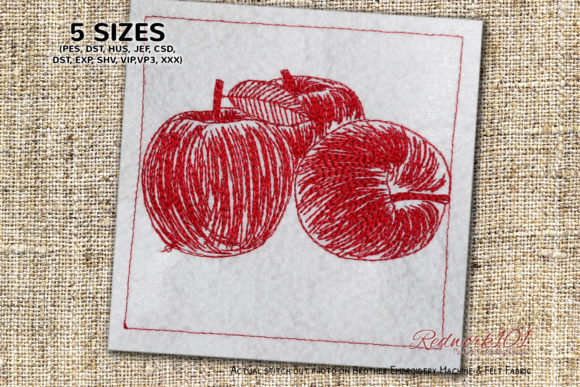
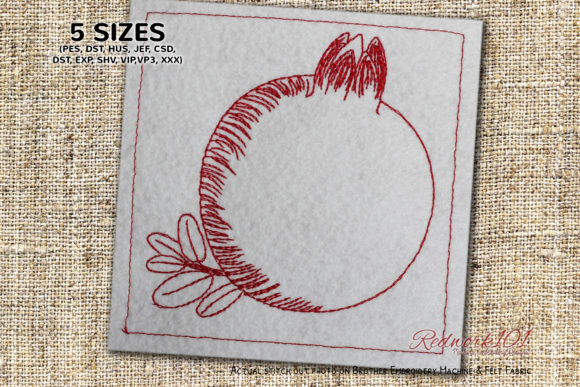
When I first opened the Healthy Pomegranate Fruits Redwork embroidery file, I was struck by its clean, deliberate simplicity. This is not a dense, photorealistic piece that demands every stitch be perfect. Instead, it leans into the redwork tradition—bold outlines, open spaces, and a hand-drawn feel that reads as both timeless and approachable. The pomegranate motif carries a natural weight: it is a fruit associated with abundance, health, and even mythology, which gives any finished product a subtle layer of meaning. As someone who has stitched through hundreds of food-themed designs, I can tell you that this one does not try to shout. It invites curiosity. And that is a rare quality in a market where so many designs rely on visual noise to compete.
What makes this design stand out for real project use is its restraint. The redwork style means the emphasis is on the linework, not on heavy fills. This gives you, the maker, a lot of creative freedom. You can treat it as a standalone piece, combine it with other fruit motifs, or use it as a repeating accent on a larger item. The optional Box Stitch frame adds a neat border, but I actually prefer skipping it for most projects—the pomegranate form itself is strong enough to carry the composition. If you choose to include the box, just be aware that the outer color is separate and can be customized or omitted entirely. That flexibility is a big plus for anyone who sells finished products, because it means you can adapt the design to different brand palettes without reworking the file.
Why This Design Works for Real Products
I recently prepared a custom tote bag for a client who runs a small organic grocery delivery service. She wanted something that felt fresh but not cartoonish, and she needed it to stitch cleanly on a natural canvas tote. The Healthy Pomegranate Fruits Redwork was an obvious choice. The open linework meant the stitches sat nicely on the medium-weight fabric without puckering, and the red thread popped against the undyed canvas. The client was thrilled with how it looked after the first wash—the lines settled into the fabric without losing definition, which is a key sign of a well-digitized design. That kind of real-world performance is what keeps me coming back to this file for client work.
If you are an Etsy seller or a craft business owner, you will appreciate how this design photographs. Redwork motifs tend to look crisp in product photos, even when shot on a phone. The pomegranate shape is recognizable at a glance, which helps with buyer engagement in listings. I have seen similar designs used on aprons, kitchen towels, and even baby onesies (with the right stabilizer), and they consistently draw positive comments. There is something about the redwork style that reads as handmade and thoughtful without looking amateur. It strikes a balance between rustic charm and professional polish.
Where Healthy Pomegranate Fruits Redwork Shines
In my experience, this design performs best on medium to heavyweight fabrics that can hold a clean line. Custom apparel like sweatshirts and t-shirts works well, provided you use a stabilizer that prevents the fabric from shifting during stitching. I have also used it on pillow covers and tea towels with excellent results. The open nature of the design means it does not trap moisture or create a stiff patch, which is crucial for items that will be washed frequently. If you are making personalized gifts or holiday gifts, this motif fits naturally into a kitchen or dining theme, but it is not so literal that it feels out of place in a nursery or living room setting. The pomegranate has a gracious, almost architectural shape that works in multiple contexts.
For commercial embroidery projects, especially those where you are producing multiple units, the relatively low stitch density is a practical advantage. Your machine will run faster, and you will spend less time changing thread colors. The design uses minimal thread changes, which reduces production time and keeps your costs manageable. If you are a small shop product maker or an apparel decorator, this is the kind of design that lets you maintain quality while scaling up production. I have stitched it on a cap with a curved surface, and while it required careful hooping and a bit of extra stabilizer, the result was clean and the lines held their shape.
When to Use This Design with Care
No design is perfect for every situation, and Healthy Pomegranate Fruits Redwork has its limits. The redwork style relies on thin, continuous lines, so if you stitch it on very dark fabric, the contrast may be less dramatic unless you use a bright thread color. I tested it on a black sweatshirt with a white thread, and it looked good, but the pomegranate seeds lost some of the detail that makes the design charming. On light or medium fabrics, the design reads beautifully. On stretchy fabrics like jersey, you will need to pay close attention to your stabilizer choice—I recommend a cutaway stabilizer for knits to prevent distortion. Likewise, if you are working with very thin or delicate fabric, the running stitch elements may pull if the tension is not dialed in correctly.
For baby embroidery or items that will be washed repeatedly, test the design on a scrap first. I always do a wash test with any new file, and I recommend the same to my clients. The redwork lines held up well after several cycles, but the thread color choice matters—use a high-quality polyester or rayon thread that resists fading. Avoid using metallic threads for this design, as the thin lines are more prone to breaking under tension. Also, if you plan to add the optional Box Stitch frame, be aware that the outer color is separate. If you skip it or change it, the overall look shifts from framed to freestanding. That is a creative choice, but it is worth testing both versions in a printable mockup before committing to a production run.
Practical Notes for Designers and Sellers
If you are a digital product seller or a creative entrepreneur planning to offer finished items featuring this design, here are a few things I have learned from using it in real projects. First, always test the hoop size before cutting fabric. The design fits comfortably in a standard 4x4 hoop, but if you are adding the box frame, you will need a slightly larger hoop to avoid clipping the corners. I recommend checking the exact dimensions in your software before starting. Second, the thread colors are minimal, but the contrast between the linework and the background is critical. I usually stitch a black and white mockup first to see if the design reads clearly. If the lines feel too thin for the intended product, you can adjust the scaling slightly, but be careful not to distort the proportions.
For commercial embroidery use, confirm the licensing terms before selling finished products or digital files. This design is suitable for both personal and commercial projects in most cases, but I always advise double-checking the specific license that came with your purchase. If you are a small business owner or an Etsy seller, this is a non-negotiable step. The last thing you want is to build a product line around a design only to discover usage restrictions. Also, consider how the design will look in printable mockups for your shop listings. The redwork style photographs well, but it benefits from natural lighting and a simple background that does not compete with the motif.
Final Thoughts Before You Stitch
I have used Healthy Pomegranate Fruits Redwork in several projects now, and it has earned a permanent spot in my digital library. It is not the flashiest design in the world, but it is reliable, versatile, and genuinely pleasant to stitch. The Food category is crowded with overly complex designs that look great on screen but disappoint after the first wash. This one holds up because it understands the limits of the medium. The Embroidery process is about translating art into thread, and this design makes that translation feel effortless. Whether you are making a one-of-a-kind personalized gift, building an embroidered patch line, or stitching a batch of tote bags for a craft fair, this file gives you a solid foundation.
My advice is to start with a test stitch on a fabric similar to your final product. Experiment with the optional Box Stitch, try different thread colors, and see how the design interacts with your stabilizer. Once you find the combination that works for your specific application, you will see why this machine embroidery design has become a quiet favorite among experienced handmade product makers. It is not a design that tries to do everything—it does one thing well, and it leaves room for your creativity to fill in the rest. That is the mark of a truly useful embroidery file.